
Tag: homepage

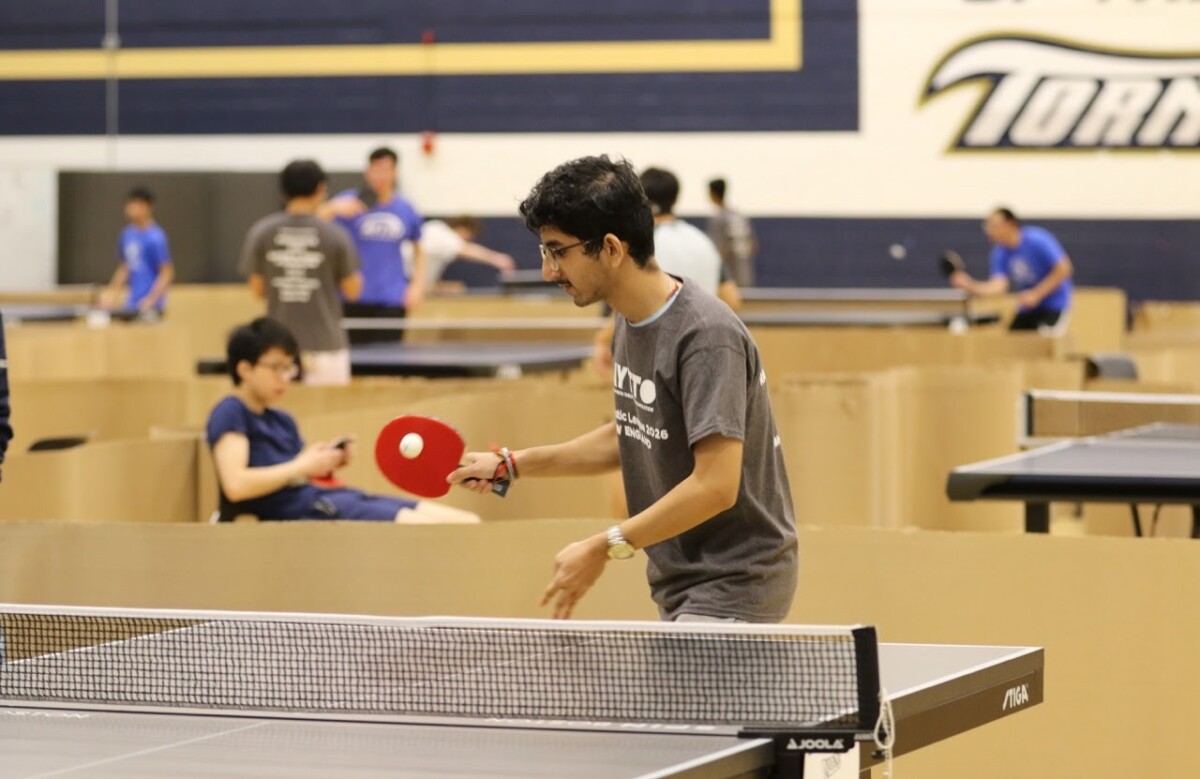
A teenager playing ping pong, with paddle in hand ready to hit a ball across a ping pong table

Manish Kumar, leader of the AHS Ping Pong Club, goes in for a shot during a tournament held in November at Malden High School. In March, with support from AEF, the club will send two teams to the playoff round, with the chance to advance to compete at the national level.

Pay a visit to Arlington High School on any Tuesday between 2:10 and 3 p.m., and you’ll find students engaged in a number of activities, whether it’s creating digital music in the performing arts wing, feeding and caring for the animals that make up the district’s popular Animal Lending Library, or participating in a friendly game of ping pong or badminton in one of the school gyms.

That hour is known as X block, a time when many high school clubs hold their meetings. Led by students, these clubs give members the opportunity to explore topics and activities beyond the school classroom. While students are responsible for raising most of the funds needed to sustain these groups, the Arlington Education Foundation last year launched a new program called Club Grants to help support them.

Student groups may receive up to $350 each though a competitive application process. Last month, in its second year of the program, AEF approved a total of $3,050 in Club Grants for nine different student activity groups at AHS.

One group to receive a grant was the Ping Pong Club, led by AHS senior Manish Kumar.
A team of teenagers standing behind a ping pong table

The AHS Ping Pong Club participated in a tournament with other area high school students held at Malden High School in November. The club recently received an AEF Club Grant to help support its tournament fees.

“I was really stoked,” Kumar said. He joined the club as a freshman, and has watched it grow over the last four years to around 30 consistent members. In November, the club sent two teams to compete in the first round of the American Youth Table Tennis Organization’s New England Scholastic Table Tennis League Tournament, held at Malden High School. In March, the teams will compete again in the playoff round, with the chance to compete at the national level if they win.

Kumar said the $350 grant from AEF will allow the club to participate in these tournaments in a way that is accessible to all students, not just those who have the financial means to do so.

“There are many clubs at Arlington High, and a lot of these clubs are to ‘build your resume,’” for college and beyond, Kumar said. “Ping Pong Club is more recreational. If you want to try the sport and be interested in it, you can. You can also take it more seriously and go to tournaments and join the team.”

Amitai Zur, an AHS junior who leads the Spanish and Portuguese Club alongside AHS senior Anna Samary Marques, said they plan to use the $300 grant they received from AEF to host two dance sessions with the Latin Dance Studio in April. The club, along with the AHS Latino Student Union, hosted similar events last year, attracting about 50 students per session to learn salsa, bachata and other dance styles.

“We want to expand on the dances from last year, and it’s great that we have it two years in a row, with a lot of students coming back,” Zur said. “Some of the kids remember some of the dances, and they will be able to keep expanding” their knowledge.
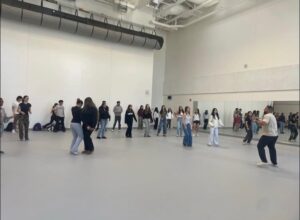
Students leaning to dance in a gym environment

The AHS Spanish and Portuguese Club held two dance sessions with the Latino Dance Studio last year. They plan to host the sessions again this April, thanks to support from an AEF Club Grant.

Receiving support from AEF is a game changer, Zur said. “It’s super helpful, and it was needed. A lot of the time, when we are doing stuff, the club leaders often spend money out of their own pockets. We have to save receipts and divide the balances among the leaders. [With the grant] the leaders can spend more time leading the activity instead of having to figure out financial stuff. We receive more money through the grants than what most leaders are willing to spend out of their own pockets. We are high school students! It opens a lot more doors.”
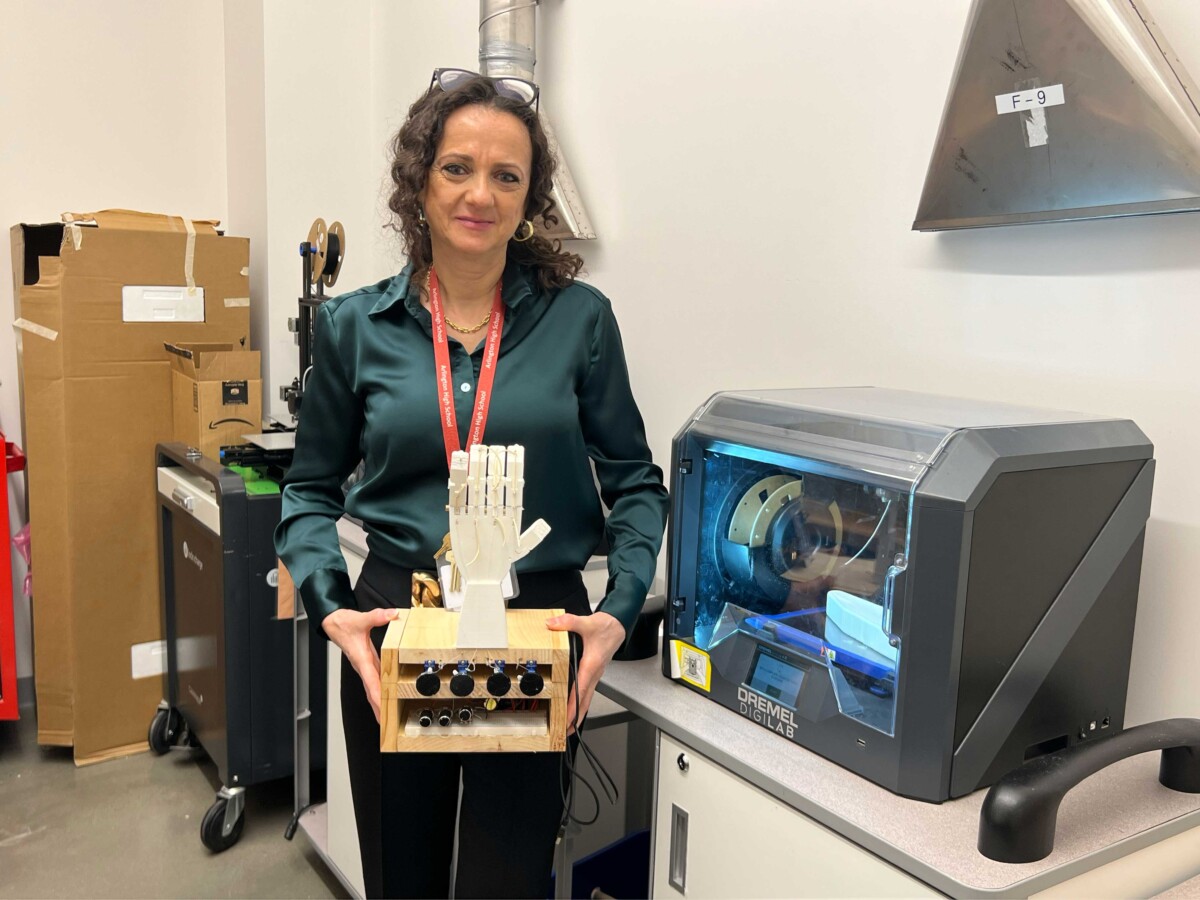


A woman holding a 3D printed hand, while standing next to a 3D printer.

Photo Caption: AHS teacher Cinzia Mangano holds a student-created prosthetic hand in front of a 3D printer. This month, Mangano was awarded a $4,000 grant from AEF to expand data-driven approaches in her architecture, design and engineering classes at the high school.

Using authentic materials, Mandarin students at Arlington High School will learn from a visiting professional artist about traditional Chinese art forms, creating connections between artistic techniques and cultural heritage. Second and third graders at Peirce Elementary School will explore math concepts on a deeper, multisensory level using weighted manipulatives. Sixth graders at Gibbs Middle School will learn to make connections between ancient civilizations and scientific observations by raising trout in the classroom. 

These are just a handful of the exciting new projects and hands-on experiences coming to students in Arlington Public Schools this year, thanks to the support of Arlington Education Foundation. 

Earlier this month, AEF awarded just over $25,0000 in fall Innovation Grants to teachers at five elementary schools, Gibbs and AHS, supporting and empowering creativity in classrooms across the district. These projects are expected to touch more than a quarter of the 6,000-plus students currently enrolled in the district, with the potential for ongoing impact that extends beyond the 2025-26 school year. 

At AHS, architecture, design/engineering and fabrication teacher Cinzia Mangano was awarded $4,000 to purchase two new 3D printers, which will expand the opportunity for more than 120 students across her classes to engage in a data-driven, experiment-based approach to learning. Instead of creating one final design, students will be able to test, analyze and improve their designs, mimicking real-world processes in the fields of architecture and engineering. The printers will also allow for cross-department collaboration; for example, design students and chemistry students could work together to create custom prototypes for use in the science lab. 

Mangano said she is thrilled to receive the grant and is working to implement the new project during the first part of the next semester. 

“These grants reflect the creativity and thoughtfulness of APS educators and will open new opportunities for student learning and growth,” said Mahlet Aklu, the AEF board member who oversees the organization’s Innovations in Education grants program. “We’re grateful to everyone who submitted a proposal and look forward to seeing these ideas come to life.” 

AEF’s Innovations in Education grants support creative endeavors and experiences that seek to transform learning for students in visible ways. Innovations grants are awarded twice a year, in the fall and spring. A nonprofit, volunteer-run organization designed to engage the community to support public education in Arlington, AEF also provides grants for educator professional development, student-run clubs at AHS and wide-ranging projects at the school and district levels. For more information about AEF, log on to aefma.org


With Thanksgiving quickly approaching, Arlington Education Foundation’s holiday STARs campaign is in full swing. STAR awards recognize the contributions of individual teachers and staff members, while also supporting educational innovation in Arlington.
STARs can be purchased for anyone from across Arlington Public Schools, not just classroom teachers. Custodians, librarians, lunch staff, nurses and administrative assistants, or even an entire learning community at the middle school level, are all eligible to receive an award. Each STAR costs $20, and donors can add a short message to be included on the certificate, if they choose. AEF will deliver the personalized awards to recipients before winter break. 

“By purchasing a STAR, you not only honor an individual educator, you also invest in future creativity and growth across Arlington Public Schools,” AEF co-president Stephanie Murphy said. “Your donation to AEF funds our many grant programs, including Innovations and Continuing Scholar awards that help teachers and students explore new ideas and bring inspiring projects to life.”

In the past year alone, AEF awarded over $170,000 in grants to Arlington Public Schools that allowed educators to attend conferences, participate in workshops and retreats, and explore new methods of teaching in their classrooms. Other grant highlights include:

    • An exciting new $4,000 pilot program to award funds to clubs at Arlington High School. Students applied for these grants, took ownership of projects, built leadership skills and made a real impact. 
    • $20,000 to the district to support the Spy Ponder Threads Closet and Community Welcome Center, providing essential resources to students and families. 
    • $4,000 to Ottoson Middle School for the creation of a soundproof Music Production Studio, where students can record projects and explore sound engineering.
  • $4,000 to Brackett Elementary School to create a Native Learning Garden to provide students with hands-on experience in exploring and building ecological habitats that support pollinators, birds and water management.

To learn more and to purchase a STAR, log onto www.aefma.org/stars. Deadline is Nov. 30 for delivery prior to winter break!


As a high school student growing up on Bainbridge Island, Wash., Adam Gooder found his home in the art room. It became the place where he met his friends, spent his off blocks and lingered before and after school, eventually launching him into a lifelong career in the arts as a professional photographer, filmmaker and teacher.
Gooder hopes to create a similar environment in his classroom at Arlington High School, where since fall 2023, he has taught digital photography, animation and filmmaking to hundreds of students in a program that is rapidly expanding, thanks to new state-of-the-art facilities made possible by the completion this month of the high school’s five-year building project. 

It’s an exciting time to be in the visual arts department, Gooder said, where growing demand has led to the creation of new courses: Last year, the department added Digital Photography II and this year, students will have the opportunity to take Digital Photography III. “[It] feels very grassroots,” Gooder said. “I don’t find myself having to sell it to students. I keep the lab open, and kids show up.” 

But the increasing popularity has also created new challenges to solve. 

“Our class sizes are too big to take to a museum,” Gooder said. “For example, Harvard Art Museum is a great resource, you can take a bus there. But they have a limit of 40 students, and last year, I had two Digital Photography II classes, each with 24 students in them. What do I do? Do I exclude some students? Do I pick which class I’m going to take?”

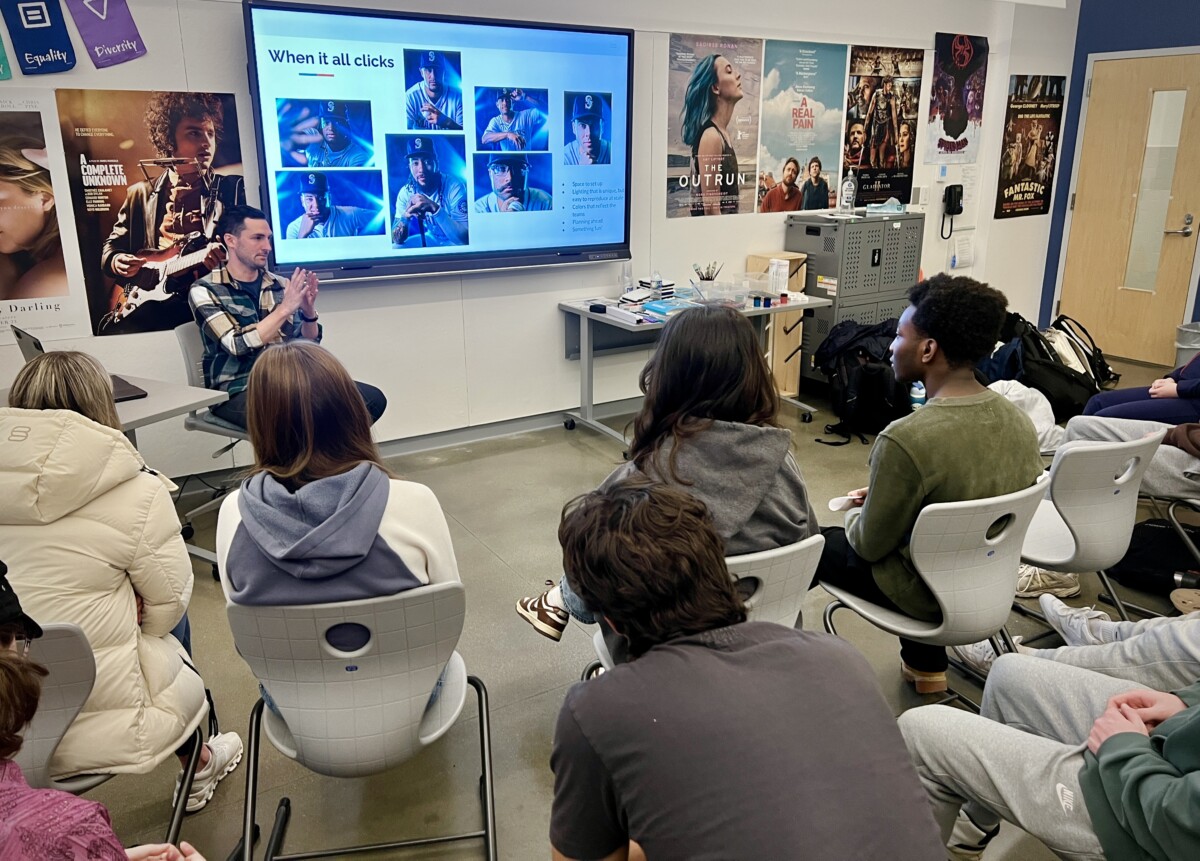
Instead, Gooder began to brainstorm ways to bring outside expertise to his students. For help, he turned to Arlington Education Foundation, a community-based nonprofit that works to empower and support public school teachers and staff. In the fall of 2024, Gooder applied for an Innovation Grant to fund a new visiting artist series to bring the professionals — animators, photographers, filmmakers — into the classroom. 

“I needed a way to give students that breadth of experience,” Gooder said. “What I want students to see is that these are viable careers. If you love it enough you can find a way to make money with it. … It took the pressure off of feeling like if I don’t take them on a field trip, then I am doing them a disservice.” 

AEF awarded Gooder a $2,800 grant to bring in four or more visiting artists over an 18-month period. Last spring, students in Gooder’s filmmaking and digital photography classes had the opportunity to work with award-winning filmmaker Thomas Percy Kim and sports/commercial photographer Adam Glanzman. Kim premiered his first feature-length film, “Isle Child,” at the San Francisco Film Festival last spring, while Glanzman’s clients have included the Boston Red Sox, Adidas and the LPGA, among many others. Gooder specifically looks for artists who are open to mentoring young people. 

The experience so far has been incredible, Gooder said. Many students told Gooder it was their favorite part of his class, and the visits led to interactions that extended well beyond the class period. One student, a graduating senior who is now attending NYU this fall, asked Gooder if he could stay after class to interview Kim about filmmaking; he showed Kim his portfolio, and the two of them talked for over an hour, Gooder said. Another small group of students, along with Gooder, had the opportunity to help Kim on set with a commercial film shoot in Concord. “It was a paid gig, and it was a good experience for them,” Gooder said. “They did audio and they did some set dressing and a little bit of shooting, served as background actors in some cases. That all came out of that one artist visit.”

Gooder still has $1,700 left on his AEF grant, and this year, he hopes to bring in at least three more artists, including an animator. He is grateful to AEF for giving him the opportunity and resources to take creative approaches in his classroom.  

“An AEF grant is really, really important to be able to give our students an enriched experience,” Gooder said. “I’m teaching in a creative field, I want my teaching and my classroom to be creative too. I want to innovate, I want to change it up. …It’s a way of honoring teachers, this kind of grant program, because what it does is to say you are the expert and tell us what you need.”


The Challenge: Keeping our Students Mentally Healthy

In 2017, Arlington Public Schools (APS) identified youth mental health as a challenge it needed to tackle. According to mentalhealth.gov, “half of all mental health disorders show first signs before a person turns 14” (i.e. anxiety and eating disorders), and three quarters of mental health disorders begin before age 24 (i.e. substance abuse).

The most recent Youth Risk Behavior Surveys at Arlington High School and the Ottoson Middle School show that mental health issues such as stress, low self-esteem, self-harm, sexual abuse and suicide contemplation/attempts are on the rise in our youth community, as is the case in many communities across the country.

How AEF Helped: Staff Training and School Plans to Support our Youth

Arlington Public Schools strive to educate students holistically so that every child has the opportunity to achieve academic, emotional, social and vocational success. Attention to students’ mental health is one of the key elements to achieving this mission.

That is why AEF is committed to awarding the district $200,000 between 2017 and 2020 to support the district’s Safe & Supportive Schools Initiative (SASS). 

As a first step, in 2017 a $100,485 AEF grant brought the Youth Mental Health First Aid (YMHFA) program to the district, allowing for over 325 Arlington Public School staff to be trained and certified. Grant funds were also used to support each school as they implemented further SASS initiatives.

The Impact: Empowering Staff and a Common Approach for Supporting Students

As of August 2019, over 325 staff – representing every school and every role from social workers to administrators – have been trained on Youth Mental Health First Aid.  Schools have also implemented plans that directly support youth behavioral health and ensure that every student has the best environment in which to learn.

“When we create a common vision, language and understanding of how to promote the mental health and well-being of our youth, support services are more focused and effective.” Sara Burd, Arlington Public Schools Director of Social & Emotional Health and Guidance

Youth Mental Health First Aid Training
During the training, which provides a basic understanding of what adolescent mental health looks like, participants learned how to:

  • intervene early and guide a student toward treatment (grades 3-12) 
  • respond to student needs through role play
  • assess risk of suicide or harm
  • help an adolescent who is experiencing a mental health or addiction challenge or who is in crisis 
  • identify mental health signs and symptoms of anxiety, depression, substance abuse, disruptive behavior disorders (including AD/HD), and eating disorders

Future plans are being made to accommodate more groups, such as transportation and lunch staff.

School-specific Initiatives
Schools across the district have implemented their own plans to support SASS. For example: 

  • Dallin Elementary focused on restorative discipline and Mindfulness in the curriculum.
  • Ottoson Middle School studied Jessica Minahan’s The Behavior Code.  
  • Thompson Elementary engaged Vinsion, Inc. for training.  
  • Arlington High School used grant funding to support Wellness and Inclusion Days.
  • Dallin and Ottoson consulted with Carlos Hoyt.

With AEF’s support, Arlington’s teachers and staff have the tools they need to identify and support all students’ social, emotional health and well-being.


Thermal Imaging

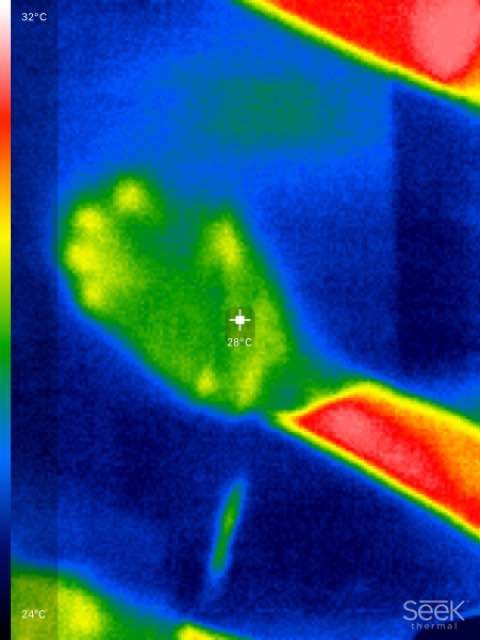
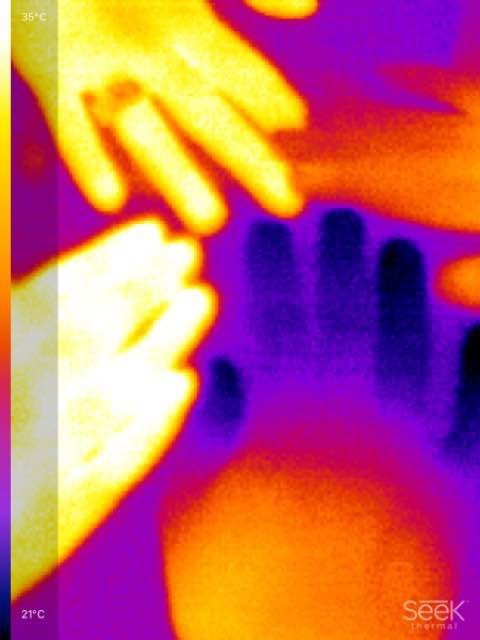
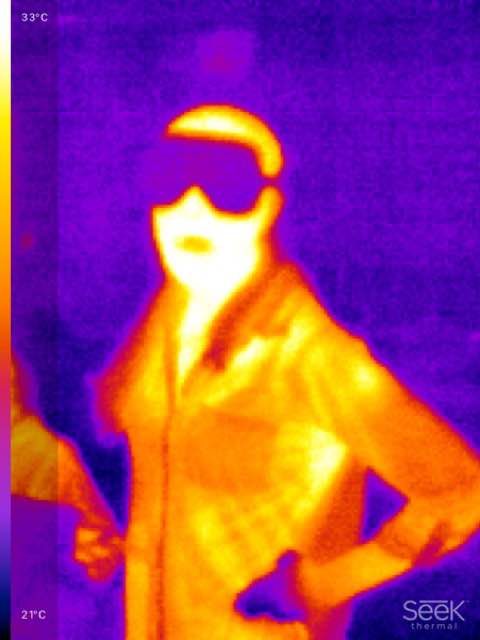
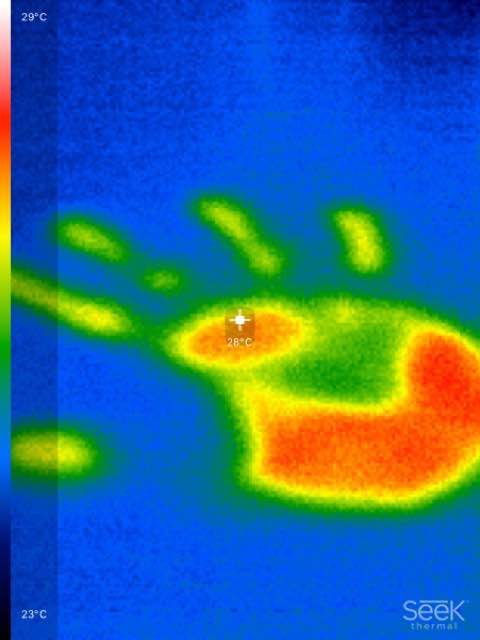
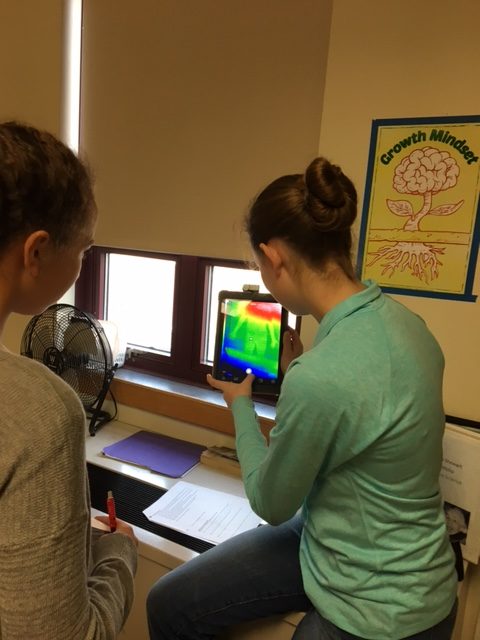
Through the use of thermal imaging adapters, 8th graders at Ottoson Middle School visualize heat as well as observe the flow of thermal energy in a fun and engaging way.

“The thermal imaging cameras are a big hit with the students and really bring the curriculum to life. The technology is so fun and visually compelling that sometimes students have a hard time sharing with their science partners.”

Susan Stewart, Ottoson Middle School, 8th Grade Science

The Challenge:  Visualizing Intangible Scientific Concepts

How do you teach students intangible scientific concepts?  Though many scientific concepts can be taught through hands-on experimentation, the topics of thermal imaging and heat transfer are more challenging.  Historically, this has been a challenging unit for students, as the flow of thermal energy is not directly visible, but rather must be evaluated by indirect means with a slow and limited technology (primarily measuring with thermometers). The concepts are not as tangible as in other units, making it difficult for students to explore and observe the processes independently.

How AEF Helped:  Bringing Thermal Imaging to Life

What if students could observe and experiment with heat transfer through hands-on experimentation just like electricity or physics?  What if students were so engaged that they forgot they were learning? Through an Innovations in Education grant, 8th graders at Ottoson Middle School turn daily technology devices like iPads and cell phones into thermal imaging observation tools.  With the purchase of a set of thermal imaging adapters, the devices display thermal images using a free, manufacturer-developed app.

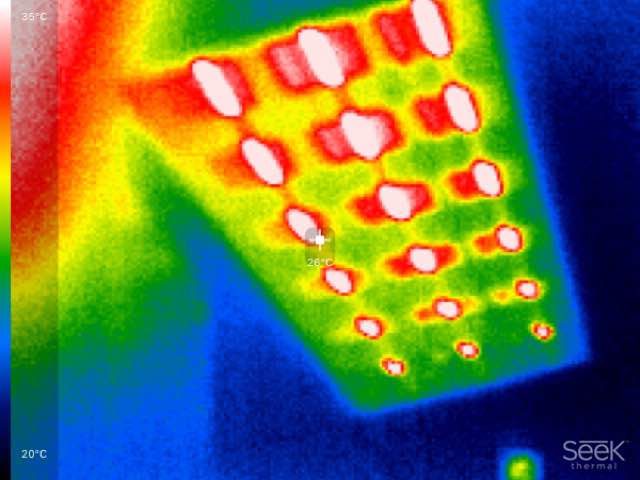
Students are now able to visualize heat sinks, heat sources and observe the flow of thermal energy in real time in a medium that is compelling and accessible.

Impact:  Engaging, Hands-On Learning

This technology allows the 8th grade Science teachers to expand and enrich the current curriculum and allow more independent, inquiry-based activities to complement traditional instruction. Students are able to observe and experiment with heat transfer through conduction, convection and radiation, and are able to observe good conductors and good insulators during lab activities.

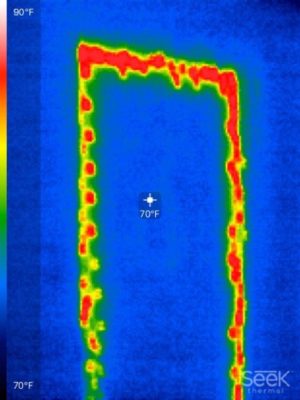
Students get first-hand knowledge of thermal energy by observing every-day classroom objects such as lights (radiation), handprints (heat transfer), metal wires (conduction), hands under fabric (insulation) and even heating pipes through a wall.

The cameras are also used during the insulator device design challenge to identify whether the student devices are working as good insulators as well as whether heat leakage is occurring.


This district-wide grant will train over 300 Arlington Public Schools staff on Youth Mental Health First Aid, a program designed to teach anyone interfacing with youth how to help an adolescent who is experiencing a mental health or addiction challenge or who is in crisis.

“When we create a common vision, language and understanding of how to promote the mental health and well-being of our youth, support services are more focused and effective.”

Sara Burd, Arlington Public Schools Director of Social & Emotional Health and Guidance

The Challenge: Keeping our Students Mentally Healthy

Our students’ mental health is critically important because it helps determine how they handle stress, relate to others and make choices. According to mentalhealth.gov, “half of all mental health disorders show first signs before a person turns 14” (i.e. anxiety and eating disorders), and three quarters of mental health disorders begin before age 24 (i.e. substance abuse).

Recent Youth Risk Behavior Surveys at Arlington High School and the Ottoson Middle School show that mental health issues such as stress, low self-esteem, self-harm, sexual abuse and suicide contemplation/attempts are on the rise in our youth community.

How AEF Helped: Staff Training to Support our Youth

The Arlington Public Schools’ mission is to educate students holistically so that every child has the opportunity to achieve academic, emotional, social and vocational success. Attention to students’ mental health is one of the key elements to achieving this mission and is part of the district’s Safe & Supportive Schools Initiative.

AEF understands the relationship between behavioral health and school success, and committed to awarding the district $200,000 between 2017 and 2020 to support the district’s initiative.

As a first step, in 2017 a $100,485 AEF grant brought the Youth Mental Health First Aid (YMHFA) program to the district.

The Impact: Supporting Students, Reducing Referrals, Keeping Students in Class

By January 2019, over 300 staff – representing every school and every role from social workers to administrators – will have been trained on Youth Mental Health First Aid.

Youth Mental Health First Aid demystifies and de-stigmatizes youth mental health challenges and provides a basic understanding of what adolescent mental health looks like. During the training, participants gain confidence through role-play; responding to student needs by offering appropriate reassurance and guidance and obtaining skills in assessing risk of suicide or harm.

The program teaches how to help an adolescent who is experiencing a mental health or addiction challenge or who is in crisis. Discussion includes mental health signs and symptoms of anxiety, depression, substance abuse, disruptive behavior disorders (including AD/HD), and eating disorders.

For staff working with grades three through twelve, the training covers types of support from early intervention to guiding a student toward treatment. With AEF’s support, Arlington’s teachers have the tools they need to support all students, reduce referrals and keep more students in the classroom.