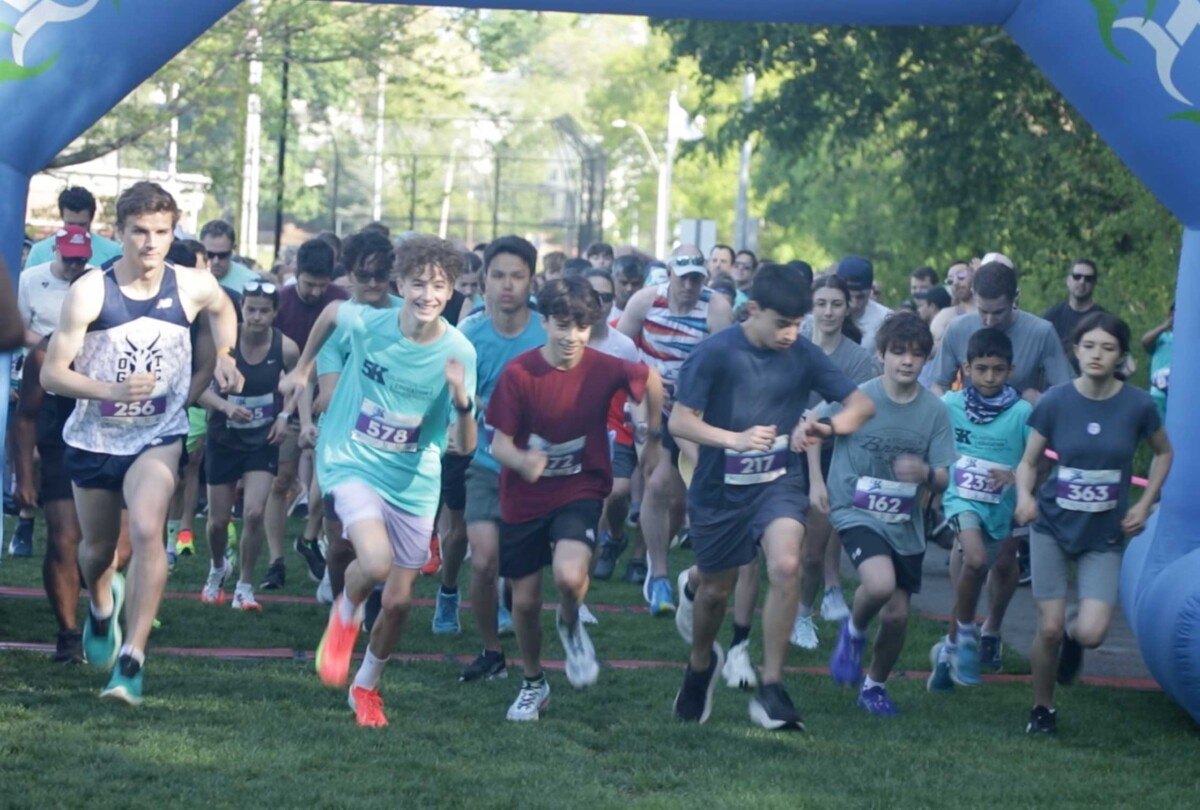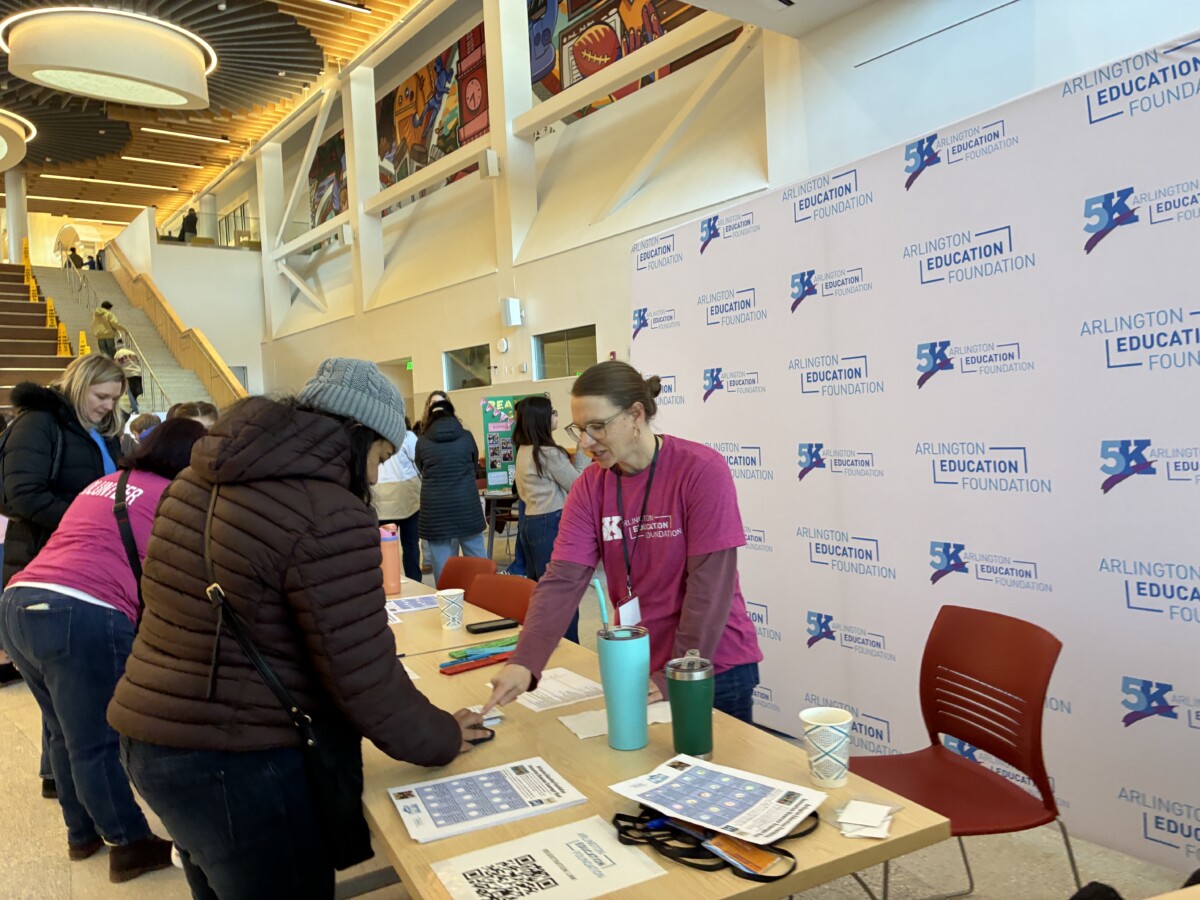
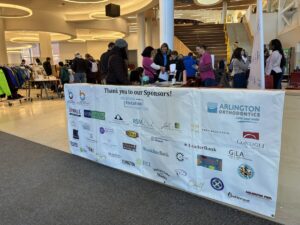
On a cold Saturday morning in January, the AHS cafeteria was full of warmth as teachers, students, and families gathered for the Arlington Education Foundation’s annual Innovation Showcase. Through interactive presentations, conversations with teachers, performances and games, the Arlington community learned about the many exciting initiatives and experiences AEF supports through its grant process.
Whether demonstrating the new fine motor tools for preschool students or discussing professional learning experiences in Antarctica and Montana, the excitement of participants was clear.

“When we can expand our own horizons, and attend workshops or seminars, we bring that back in our classrooms, and it’s so valuable,” said Heather Mahoney, a Gibbs Language Arts teacher who attended a Montana Writing retreat in 2025 with support from AEF and presented at the showcase.

The showcase highlighted the five types of grants the foundation offers: District Investment and Development & Expansion (for schools and the district); Innovation Grants (for educators); Continuing Scholars (for educators); and Clubs (for students).

The Club Grants, which provide up to $350 for established student groups at Arlington High School, are a new AEF initiative. Leaders of the Anime, Ping Pong, Zoo Crew, and Reading Buddies clubs were all on hand to discuss their activities and the impact of their grant; Ping Pong Club also had a table set up to teach the game to anyone interested.

AHS senior Manish Kumar, a Ping Pong Club leader, said the grant ensures students can attend local ping-pong tournaments without regard to financial means.

If you want to try the sport and be interested in it, you can,” said Kumar. “You can also take it more seriously and go to tournaments and join the team.”
When not visiting booths, showcase guests enjoyed a scavenger hunt and performances by AHS musical groups. Local businesses including Del’s Lemonade, Book Rack, Andrina’s Pizzeria, Wegmans, Quebrada Baking Co., Cookie Time, Butternut Bakehouse, Above and Beyond Pet Services, Henry Bear’s Park, and Happy Camper enhanced the morning with generous raffle-prize donations.
“It was exciting to meet so many of our grant recipients and hear from them directly about the impact they’re having in our schools,” said Lauren Hague, AEF’s co-president. “We’re already looking forward to next year.”


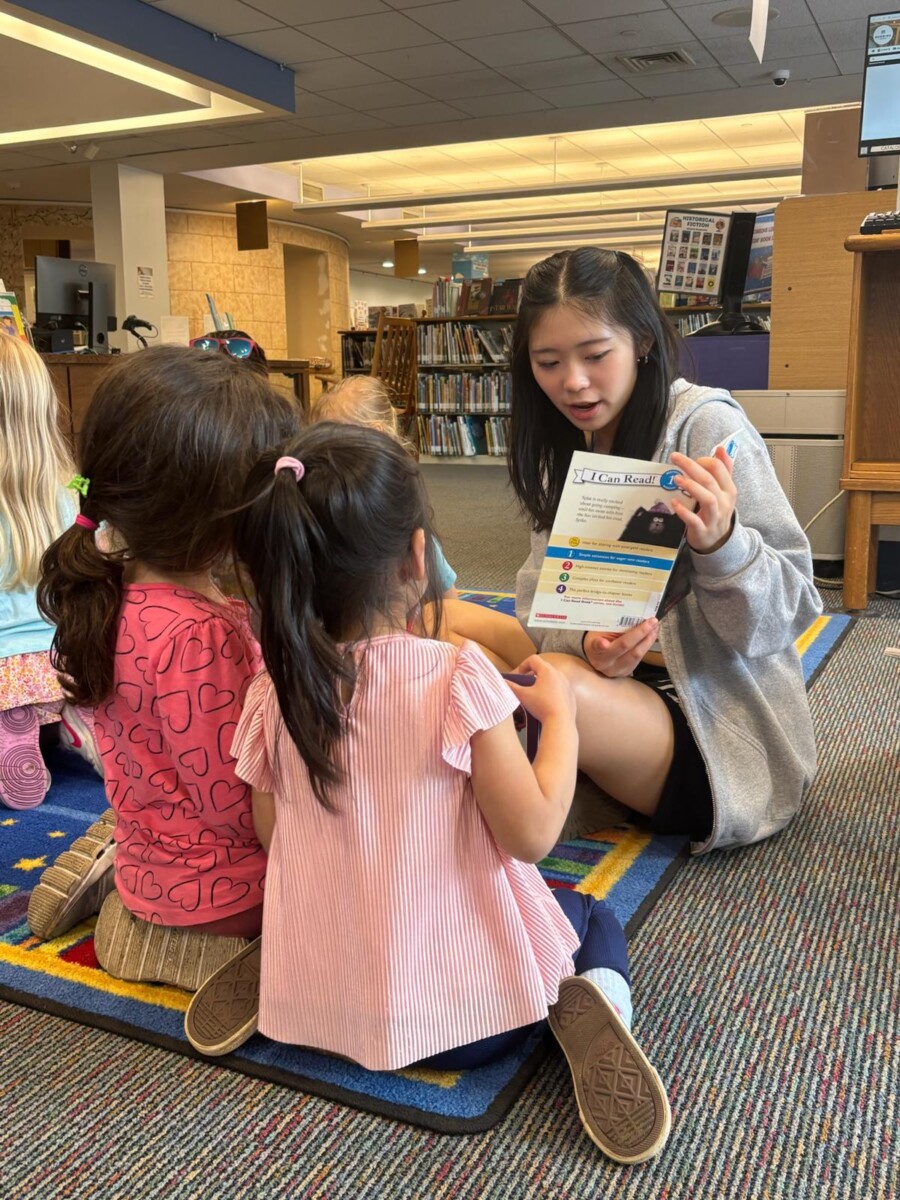
Seated on the floor, a young person reads to a group of children at the library

When Anoushka Shesh was in kindergarten, she struggled to learn how to read. She had fallen behind, and to help, her mother brought her to their local library in Illinois, where Illinois State University students volunteered each week to read with younger kids and work on early literacy skills.

Child leaning over a table covered with books and reachingTen years later, as a freshman at Arlington High School, Shesh recalled just how meaningful that experience was. She shared it with friend and fellow classmate Maya Alajaji, and the pair decided to try launching a similar program in Arlington. “We knew that with Covid, a lot of kids were feeling less comfortable with reading,” Shesh said. They also saw the initiative as a way to build a bridge between two different groups of students who might not otherwise have a reason to connect with each other. She and Alajaji approached Robbins Library with their idea, and Reading Buddies was born in the winter of 2024.
Now in their junior year at AHS, Shesh and Alajaji continue to grow and expand the program. Each week, an active network of roughly 40 AHS students volunteer to meet with elementary age students during drop-in sessions on multiple days at Robbins Library to practice reading skills. And last spring, with support from a $300 Arlington Education Foundation Club Grant, Reading Buddies held its first Spring into Reading event at the high school, hosting 40-50 preschool and elementary students and their families for an afternoon of read-alouds, face painting, book-themed raffles and other fun activities to encourage literacy.

“We wanted it to be something that people in Arlington could come together for,” Alajaji said. The event was so successful that Reading Buddies has held two more similar events this school year — a Fall into Reading event and a second annual Spring into Reading this spring. This year, they incorporated a book drive/sale to help raise funds to donate to Cradle to Crayons.Seated on the floor, a young person reads to a group of children at the library

“We created little hand puppets that the kids could decorate, and we bought puzzle pieces that the kids could draw on that we want to assemble into a big mural,” Alajaji said. “All of the interactive stations and craft ideas really worked out, and kids seemed to enjoy them,” Shesh added.

The program has been a win for AHS students, who receive volunteer hours to satisfy both school and National Honor Society requirements. But seeing the lasting impact on the younger students they work with has been the most rewarding, Shesh and Alajaji said. “It builds that meaningful connection between a high schooler and a kid, seeing them every week,” Shesh said. “On Wednesdays, we now have a preschool that comes in because they know specifically that Reading Buddies is there on Wednesdays. The volunteers split off to read to groups of them. They are very cute.”

They are grateful to AEF for its support. The AEF Club Grant provided a springboard to expand their program in a way they might not otherwise have been able to, Shesh and Alajaji said. The process of applying for the grant helped them to refine and organize their plans because they had to lay out exactly how they would spend the money, Shesh said. Later, as they were launching the event, they would refer back to their grant application to remind themselves of those specific plans.

“It really empowers clubs to think outside of the box, and allows them to host events like Spring into Reading that might require more funds that students don’t usually have access to,” Alajaji said, adding that the grant “allows students to be creative and help their ideas come to life, without the help of adults, which teaches a lot of independence.”

Next year, Alajaji and Shesh will be seniors and they are already making plans to ensure that Reading Buddies continues past their tenure at the high school. They’ve identified two younger AHS students who have been consistent participants and who are committed to shadowing Shesh and Alajaji over the next year, with the hopes of becoming the new leaders once Shesh and Alajaji graduate.


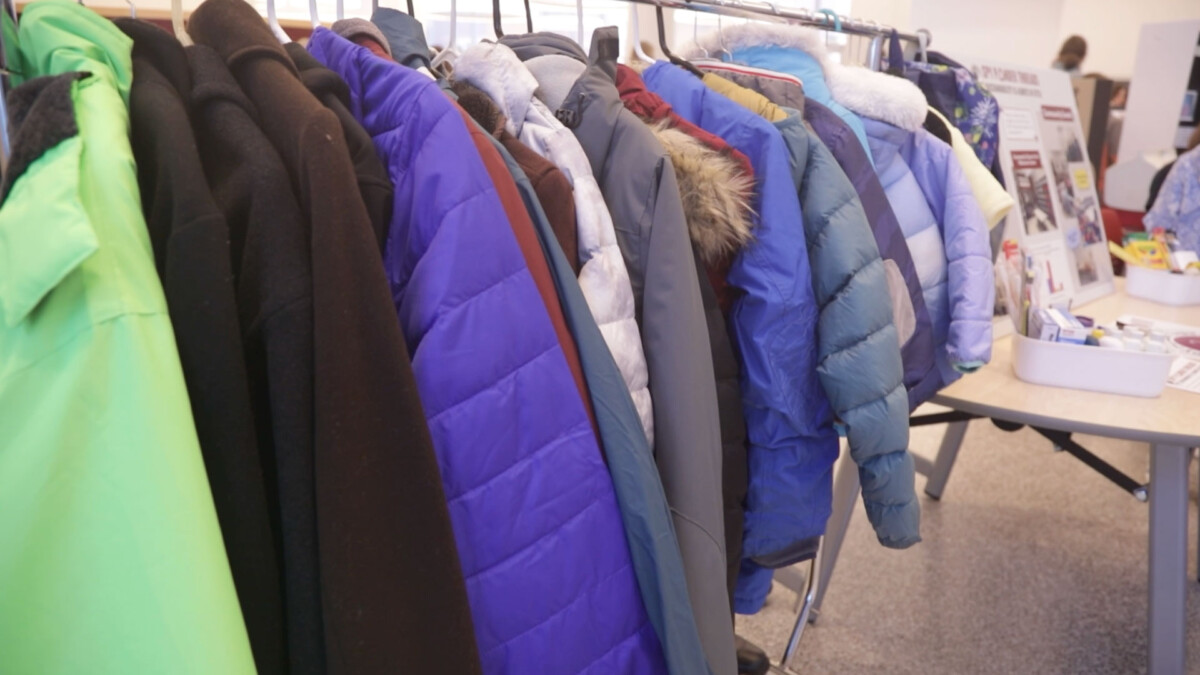
A clothing rack filled with winter coats

Winter coat too small? Boots don’t fit? Or maybe the backpack your child started school with in September has been through the ringer this year, and needs to be replaced? A visit to the Spy Ponders Threads closet may be in order.

Created around the idea that students can better focus on learning if they have the supplies they need, Spy Ponders Threads provides Arlington families with access to free clothing, outerwear, shoes, backpacks, water bottles, toiletries and other essentials. This year, thanks to a $20,000 Development & Expansion grant from Arlington Education Foundation, Spy Ponders Threads has expanded districtwide to include a centralized closet at the APS Welcome & Resource Center at Arlington High School, along with three additional satellite closets at Ottoson Middle School, Gibbs and Thompson Elementary School.

A clothing rack filled with winter coats

Donated coats from Spy Ponder Threads ready for the colder months

Families, students and APS staff are all eligible to shop the Spy Ponders Threads closets. Available items include black pants for school concert performances, athletic wear for gym classes, menstrual supplies and dress shirts and slacks for job interviews. Last fall alone, Spy Ponders Threads distributed more than 350 bags of clothing, 750 coats, 92 pairs of shoes, 46 bags of school supplies and over 175 bags of toiletries to more than 700 visitors.

“This is an initiative that is supporting our community,” says Rachel Oliveri, Sustainability Project Manager for APS. “We’re so grateful to the Arlington Education Foundation for supporting us.”

Spy Ponders Threads also provides families with a way to help each other and give back to their community. Families are encouraged to donate gently used and new clothing, coats, shoes and other items in good condition. APS maintains an active donation list on its website. A team of volunteers sorts the donations and readies them for distribution. The Spy Ponds Threads closet at the APS Welcome & Resource Center is open Monday, Wednesday, Friday from 9 a.m. to 3 p.m. for visitors to stop by.


Tall grass along a rural road on a sunny day under a vivid blue sky

As a sixth grade ELA teacher at the Gibbs School, Heather Mahoney knows it can be challenging for students to share their writing with others. “It’s a really vulnerable position to be in,” she said. 

To better understand her students’ experience, Mahoney chose to put herself in their shoes during summer 2025. With support from the Arlington Education Foundation, she attended an intensive writing workshop in Sweet Grass County, Mont., which offered both an immersive learning experience for her and new ideas for her classroom. 

“It was so valuable to be on the other side of the experience,” said Mahoney, who has taught in Arlington since 2013. “It’s really hard to be a middle-schooler, especially if someone is trying to make you participate in a certain way, and find your voice in a public way, and so I wanted to have that experience myself.”

Tall grass along a rural road on a sunny day under a vivid blue sky

The Montana setting of Heather Mahoney’s August 2025 workshop (photo courtesy of Heather Mahoney).

The weeklong workshop focused on the adult participants’ own writing as well as the poetry of Mary Oliver, and emphasized the need for both rigor and community among writers. Mahoney said she has brought those paired concepts —  rigor and community — back to her own classroom. Because the relationship students have with each other, and with her, affects their willingness to share their work and their ability to hear criticism of it, a rigorous approach to reading and writing requires a strong community culture. 

“We have very short classes of 46 minutes, so we have to be very careful at Gibbs about what we’re putting time toward,” she said, adding that “Having the framework of community and rigor gives me a good framework.” 

 The summer experience also left Mahoney feeling renewed and excited for the school year to come. “So much of teaching is personal, and for teachers, our ability to teach well is limited by our own horizons,” she said. “When we can expand our own horizons, and attend workshops or seminars, we bring that back in our classrooms, and it’s so valuable to have a more expansive understanding.”

Mahoney is among dozens of teachers from across Arlington Public Schools who have received Continuing Scholar Awards grants from AEF. These grants allow teachers and staff members to receive up to $2,500 for personal and professional enrichment experiences that, in turn, benefit Arlington students.


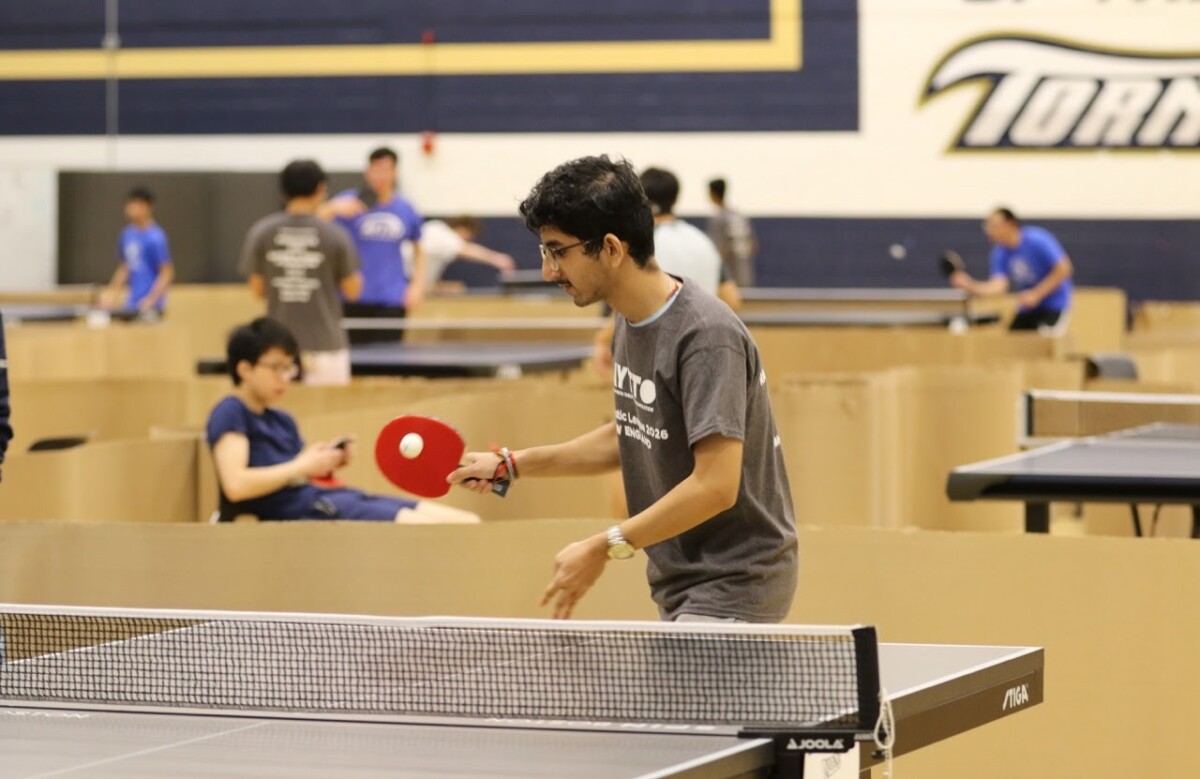
A teenager playing ping pong, with paddle in hand ready to hit a ball across a ping pong table

Manish Kumar, leader of the AHS Ping Pong Club, goes in for a shot during a tournament held in November at Malden High School. In March, with support from AEF, the club will send two teams to the playoff round, with the chance to advance to compete at the national level.

Pay a visit to Arlington High School on any Tuesday between 2:10 and 3 p.m., and you’ll find students engaged in a number of activities, whether it’s creating digital music in the performing arts wing, feeding and caring for the animals that make up the district’s popular Animal Lending Library, or participating in a friendly game of ping pong or badminton in one of the school gyms.

That hour is known as X block, a time when many high school clubs hold their meetings. Led by students, these clubs give members the opportunity to explore topics and activities beyond the school classroom. While students are responsible for raising most of the funds needed to sustain these groups, the Arlington Education Foundation last year launched a new program called Club Grants to help support them.

Student groups may receive up to $350 each though a competitive application process. Last month, in its second year of the program, AEF approved a total of $3,050 in Club Grants for nine different student activity groups at AHS.

One group to receive a grant was the Ping Pong Club, led by AHS senior Manish Kumar.

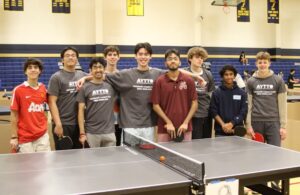
A team of teenagers standing behind a ping pong table

The AHS Ping Pong Club participated in a tournament with other area high school students held at Malden High School in November. The club recently received an AEF Club Grant to help support its tournament fees.

“I was really stoked,” Kumar said. He joined the club as a freshman, and has watched it grow over the last four years to around 30 consistent members. In November, the club sent two teams to compete in the first round of the American Youth Table Tennis Organization’s New England Scholastic Table Tennis League Tournament, held at Malden High School. In March, the teams will compete again in the playoff round, with the chance to compete at the national level if they win.

Kumar said the $350 grant from AEF will allow the club to participate in these tournaments in a way that is accessible to all students, not just those who have the financial means to do so.

“There are many clubs at Arlington High, and a lot of these clubs are to ‘build your resume,’” for college and beyond, Kumar said. “Ping Pong Club is more recreational. If you want to try the sport and be interested in it, you can. You can also take it more seriously and go to tournaments and join the team.”

Amitai Zur, an AHS junior who leads the Spanish and Portuguese Club alongside AHS senior Anna Samary Marques, said they plan to use the $300 grant they received from AEF to host two dance sessions with the Latin Dance Studio in April. The club, along with the AHS Latino Student Union, hosted similar events last year, attracting about 50 students per session to learn salsa, bachata and other dance styles.

“We want to expand on the dances from last year, and it’s great that we have it two years in a row, with a lot of students coming back,” Zur said. “Some of the kids remember some of the dances, and they will be able to keep expanding” their knowledge.

Students leaning to dance in a gym environment

The AHS Spanish and Portuguese Club held two dance sessions with the Latino Dance Studio last year. They plan to host the sessions again this April, thanks to support from an AEF Club Grant.

Receiving support from AEF is a game changer, Zur said. “It’s super helpful, and it was needed. A lot of the time, when we are doing stuff, the club leaders often spend money out of their own pockets. We have to save receipts and divide the balances among the leaders. [With the grant] the leaders can spend more time leading the activity instead of having to figure out financial stuff. We receive more money through the grants than what most leaders are willing to spend out of their own pockets. We are high school students! It opens a lot more doors.”


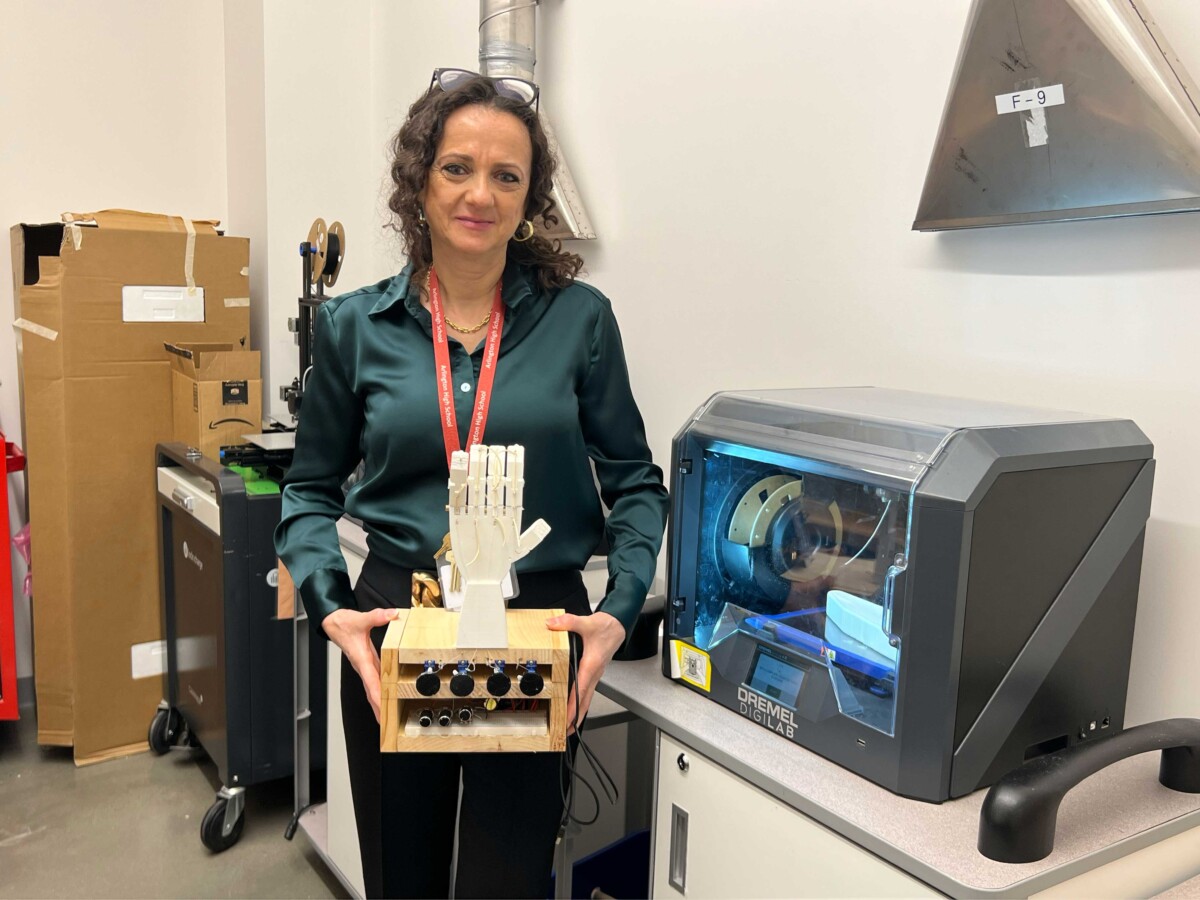
A woman holding a 3D printed hand, while standing next to a 3D printer.

Photo Caption: AHS teacher Cinzia Mangano holds a student-created prosthetic hand in front of a 3D printer. This month, Mangano was awarded a $4,000 grant from AEF to expand data-driven approaches in her architecture, design and engineering classes at the high school.

Using authentic materials, Mandarin students at Arlington High School will learn from a visiting professional artist about traditional Chinese art forms, creating connections between artistic techniques and cultural heritage. Second and third graders at Peirce Elementary School will explore math concepts on a deeper, multisensory level using weighted manipulatives. Sixth graders at Gibbs Middle School will learn to make connections between ancient civilizations and scientific observations by raising trout in the classroom. 

These are just a handful of the exciting new projects and hands-on experiences coming to students in Arlington Public Schools this year, thanks to the support of Arlington Education Foundation. 

Earlier this month, AEF awarded just over $25,0000 in fall Innovation Grants to teachers at five elementary schools, Gibbs and AHS, supporting and empowering creativity in classrooms across the district. These projects are expected to touch more than a quarter of the 6,000-plus students currently enrolled in the district, with the potential for ongoing impact that extends beyond the 2025-26 school year. 

At AHS, architecture, design/engineering and fabrication teacher Cinzia Mangano was awarded $4,000 to purchase two new 3D printers, which will expand the opportunity for more than 120 students across her classes to engage in a data-driven, experiment-based approach to learning. Instead of creating one final design, students will be able to test, analyze and improve their designs, mimicking real-world processes in the fields of architecture and engineering. The printers will also allow for cross-department collaboration; for example, design students and chemistry students could work together to create custom prototypes for use in the science lab. 

Mangano said she is thrilled to receive the grant and is working to implement the new project during the first part of the next semester. 

“These grants reflect the creativity and thoughtfulness of APS educators and will open new opportunities for student learning and growth,” said Mahlet Aklu, the AEF board member who oversees the organization’s Innovations in Education grants program. “We’re grateful to everyone who submitted a proposal and look forward to seeing these ideas come to life.” 

AEF’s Innovations in Education grants support creative endeavors and experiences that seek to transform learning for students in visible ways. Innovations grants are awarded twice a year, in the fall and spring. A nonprofit, volunteer-run organization designed to engage the community to support public education in Arlington, AEF also provides grants for educator professional development, student-run clubs at AHS and wide-ranging projects at the school and district levels. For more information about AEF, log on to aefma.org


With Thanksgiving quickly approaching, Arlington Education Foundation’s holiday STARs campaign is in full swing. STAR awards recognize the contributions of individual teachers and staff members, while also supporting educational innovation in Arlington.


STARs can be purchased for anyone from across Arlington Public Schools, not just classroom teachers. Custodians, librarians, lunch staff, nurses and administrative assistants, or even an entire learning community at the middle school level, are all eligible to receive an award. Each STAR costs $20, and donors can add a short message to be included on the certificate, if they choose. AEF will deliver the personalized awards to recipients before winter break. 

“By purchasing a STAR, you not only honor an individual educator, you also invest in future creativity and growth across Arlington Public Schools,” AEF co-president Stephanie Murphy said. “Your donation to AEF funds our many grant programs, including Innovations and Continuing Scholar awards that help teachers and students explore new ideas and bring inspiring projects to life.”

In the past year alone, AEF awarded over $170,000 in grants to Arlington Public Schools that allowed educators to attend conferences, participate in workshops and retreats, and explore new methods of teaching in their classrooms. Other grant highlights include:

    • An exciting new $4,000 pilot program to award funds to clubs at Arlington High School. Students applied for these grants, took ownership of projects, built leadership skills and made a real impact. 
    • $20,000 to the district to support the Spy Ponder Threads Closet and Community Welcome Center, providing essential resources to students and families. 
    • $4,000 to Ottoson Middle School for the creation of a soundproof Music Production Studio, where students can record projects and explore sound engineering.
  • $4,000 to Brackett Elementary School to create a Native Learning Garden to provide students with hands-on experience in exploring and building ecological habitats that support pollinators, birds and water management.

To learn more and to purchase a STAR, log onto www.aefma.org/stars. Deadline is Nov. 30 for delivery prior to winter break!


Michael Sandler teaches his psychology class in front of a screen showing the regions of the brain

Michael Sandler teaches his psychology class.After Arlington High School students make the climb to Michael Sandler’s 5th floor classroom after lunch, they are confronted by a chart comparing Facebook users’ engagement with fake news to their engagement with real news. 

“Which one is winning?” Sandler asks, gesturing at the smart board. “Which kind of news gets the most likes and shares?” 

“The fake,” says a student in the Psychology and Human Behavior class. Others, reading the graph, nod in agreement. 

“Thanks to AEF, I was able to spend time in an environment where everybody is interested in psychology and learn from people whose work I’d only read about,” Sandler says. “The breadth of expertise at the event was amazing. It was a real gift to attend.” 

“OK,” Sandler says. “Now which of the types of cognitive bias we’ve studied might explain that? Why would people be more attracted to something that’s fake but supports their world view, versus something real that might challenge it?”

“Confirmation bias,” another student offers. “We believe what we already think is true.”

Using a mix of texts, videos and cartoons, Sandler goes on to introduce a range of other cognitive biases as well as real-world contemporary examples. “Psychology is always changing,” he says. “I want to keep it fresh and current and focused on science.”

The desire to keep his course up to date and relevant to his teenage students led him to apply for an Arlington Education Foundation grant to attend the American Psychological Association’s annual convention in Denver, Colo. this past August. Sandler received roughly $2,200 from an AEF Continuing Scholars Award to help cover travel and registration costs. 

“Thanks to AEF, I was able to spend time in an environment where everybody is interested in psychology and learn from people whose work I’d only read about,” Sandler says. “The breadth of expertise at the event was amazing. It was a real gift to attend.” 

At the conference, he discovered two APA initiatives that have been informing his teaching this fall. The first is an effort to add more student collaboration to the teaching of psychology. In his Psychology and Human Behavior class, for example, he assigns each student a cognitive bias to research and then sets up a “speed-dating” exercise to compare the types of biases. 

The second initiative aims to introduce students to the range of careers within the psychology field by bringing practitioners into the classroom. “While we often think first of therapists or clinical social workers, there are psychologists in the Armed Forces, in Fortune 500 companies and in research, too,” says Sandler, who also teaches AP Psychology at the high school. 

He says he is eager to connect with Arlington residents in the psychology field who might enjoy visiting his classes and discussing their work with students. 

As Sandler reminisces about the APA convention and its effect on his teaching, he exudes an enthusiasm for his subject that he says has held constant in his 18 years at the high school. “I feel very lucky that I get to talk about psychology all day long,” he says.

Both his students and his peers have noticed: Sandler was the AEF’s STARs Teacher of the Year in 2011, and most recently, a 2025 recipient of an Excellence in Teaching award from the APA’s Committee of Teachers of Psychology in Secondary Schools.


Menotomy Preschool Teacher Sif Ferranti is using the school’s new 3D printer to create math and counting games based on themes such as the fall season to help make lessons more relevant to her students.

Menotomy Preschool Social Worker Elena Knightly displays materials she uses to teach calm-down strategies to her young students, including three-dimensional objects printed with the school’s new 3D printer.

When you are about to lose your cool in a situation, what do you do?

First, it might be helpful to identify what you are feeling and why. Then, you might need to draw upon some tools — some moments of deep breathing, for example — to help calm yourself down.

Such abstract concepts can be difficult for adults to wrap their heads around, let alone 3- and 4-year-olds. But teachers and staff at Menotomy Preschool are employing creative ways to help their young students understand these ideas and much more, and they are utilizing funds from an Arlington Education Foundation grant to do it.

Last year, preschool teacher Sif Ferranti and social worker Elena Knightly had an idea: What if they could create custom manipulatives — three-dimensional objects — to help make some of the lessons they were trying to teach more concrete, improving learning for students of all abilities in the classroom? To turn this idea into reality, they looked to AEF, applying for and receiving a $4,000 Innovations Grant to purchase a 3D printer for Menotomy Preschool.

Now, when Knightly is teaching preschoolers how to use calm-down strategies, she reads to them from a picture book and shows them laminated illustrations of different types of breathing. But she also hands out custom-printed 3-D objects — a figure 8, a snail, a starfish and a wave — for students to hold and touch and practice the strategies she is helping them to develop.

Young children learn best from hands-on strategies that engage all the senses, including touch and feel, Knightly said. Having a three-dimensional object to hold makes learning accessible for students who are not quite ready for other modes of instruction. “Developmentally, the trajectory goes from recognizing an object, to holding and feeling the object, and then to picture representation,” Knightly said. “So we want to make sure we are not skipping that first object level for kids, and to be able to hold something not only occupies little hands, but it really solidifies learning in a different way for them, so that they are much more engaged in a lesson and much more willing to participate than just being spoken at.”

The 3D printer is not just for teaching social-emotional skills. Ferranti and Knightly are using it to create custom manipulatives for other lessons as well, enhancing the school’s curriculum in subjects such as math, phonics and writing. When teachers read Eric Carle’s “Brown Bear, Brown Bear,” students hold 3-D representations of each of the animals featured in the story, and then play with them throughout the day. Instead of a counting jar filled with marbles or blocks, there is a jar filled with dozens of small plastic fall leaves, And instead of a generic two-dimensional pizza math game, there is an apple tree with removable apples, allowing teachers to connect lessons to the everyday activities students might be participating in with their families at home.

“Everybody’s doing fall right now, so we are learning as we go how to make the curriculums that we use more purposeful for kids,” Knightly said. “Instead of learning about counting and numbers in a pizza game all year long, we are really refining it so that it connects to what they are doing in real life.”

“Right, why are we doing a pizza game? We’re picking apples with mom and dad,” Ferranti adds. “So we can adapt and make it fun.”

Even the preschoolers themselves are joining in on that fun, Ferranti said. One 4-year-old student had the idea to create a Statue of Liberty torch for the line leader to hold, so Ferranti printed one. In the process, students are exposed to concepts in history, stem and other subjects. “They have good ideas, those kids,” Ferranti said.

The custom manipulatives are available to around 100 students in classrooms throughout the preschool, as well as an additional 35 young children from the community who come in for discreet services, such as once-a-week speech therapy.

“We are developing skills and we are connecting objects we make with the curriculum,” Ferranti said. “We are here to teach people, and we are here to teach all the people. We are really excited we got the grant.”


“People’s success is about skill, not will,” says Katie Miller.

A school counselor at the Gibbs School, Miller grows animated as she discusses an approach to discipline called Collaborative Problem Solving (CPS), in which she and colleagues across the district received summer training. She says the CPS motto of “skill, not will,” offered her a new lens on her work with sixth-grade students and their teachers. Now, when she hears from a teacher with a challenging student, or from a student struggling to meet school expectations, she asks herself what skills the student may be missing and how she, the teacher and the student can collaborate to build that skill. “People do well if they can,” she adds.

The CPS summer training, funded in part by a $32,000 District Investment grant from the Arlington Education Foundation, is part of a district-wide initiative to align disciplinary approaches at the town’s three secondary schools. Arlington High School has been using the CPS model (a program of the Department of Psychiatry at Massachusetts General Hospital) for about a decade, while Ottoson Middle School and Gibbs are in the early stages of implementation.

AHS Principal Matthew Janger says the AEF grant will allow the high school to deepen and re-energize its work in CPS. A key part of the model, he says, is encouraging staff to think in terms of a Plan A, B, and C when it comes to student misbehavior. Plan A is what he refers to as “the adult plan,” whereby, if a student breaks a rule, there’s an immediate consequence (from a lower grade to suspension) aimed at encouraging them to follow it next time. Plan C is what he calls “the student’s plan, where the teacher just drops the expectation.” Plan B, on the other hand, asks staff to consider that misbehavior may reflect the absence of a skill and collaborate with the student on improvements.

He credits CPS with helping reduce the average annual suspensions at AHS from about 75 to 20, and with improved relationships between adults and students. He also stresses that CPS is not about giving in or letting students get away with bad behavior, but rather seeking to understand the reason for it and engage students in the solution.

“If a kid is chronically late, and you ratchet up the consequence, and they’re still late, there’s got to be more going on,” he said. “If the kid doesn’t know how to be on time, punishing them for being late doesn’t teach the skill.”

Ottoson Middle School, which is in the first year of implementing CPS, had approximately 25 staff and some families participate in the August training, and Principal Rochelle Rubino said she already sees the results at work. “We’re turning to CPS to engage in difficult conversations and help students engage collaboratively with an adult around a challenge,” she said, noting that the model helps in situations ranging from a student having trouble with homework to one refusing to attend school.

She said she’s grateful to AEF’s grant for continued professional training during the school year. She also believes the shared language of Plan A, B, C across grades 6-12 will be beneficial to staff and students, a sentiment echoed by both Dr. Janger, of the high school, and Andrew Ahmadi, principal of Gibbs.

While Gibbs sent only a few staff to this past summer’s workshop, Ahmadi said he’s been excited to see participants like counselor, Katie Miller, share her knowledge with others. He hopes to offer more formal training to staff during the school year, as well as next summer. “It was a very powerful experience,” he says.

Reflecting on how the workshop informs her day-to-day experience at Gibbs, Miller says the Plan A, B, C language helps her and her colleagues keep in mind that they always have a choice in their response and a range of tools available. “There are times I get a call from a teacher, and we don’t have time, and we have to accept that the student won’t meet the expectation right in the moment,” she says. “But you do so knowing that when you have more time, you can work on a Plan B.”